Presence
Messaging feels different when people feel present. ELM gives presence a stronger role instead of reducing everything to silent text exchange.
 ELM HQ
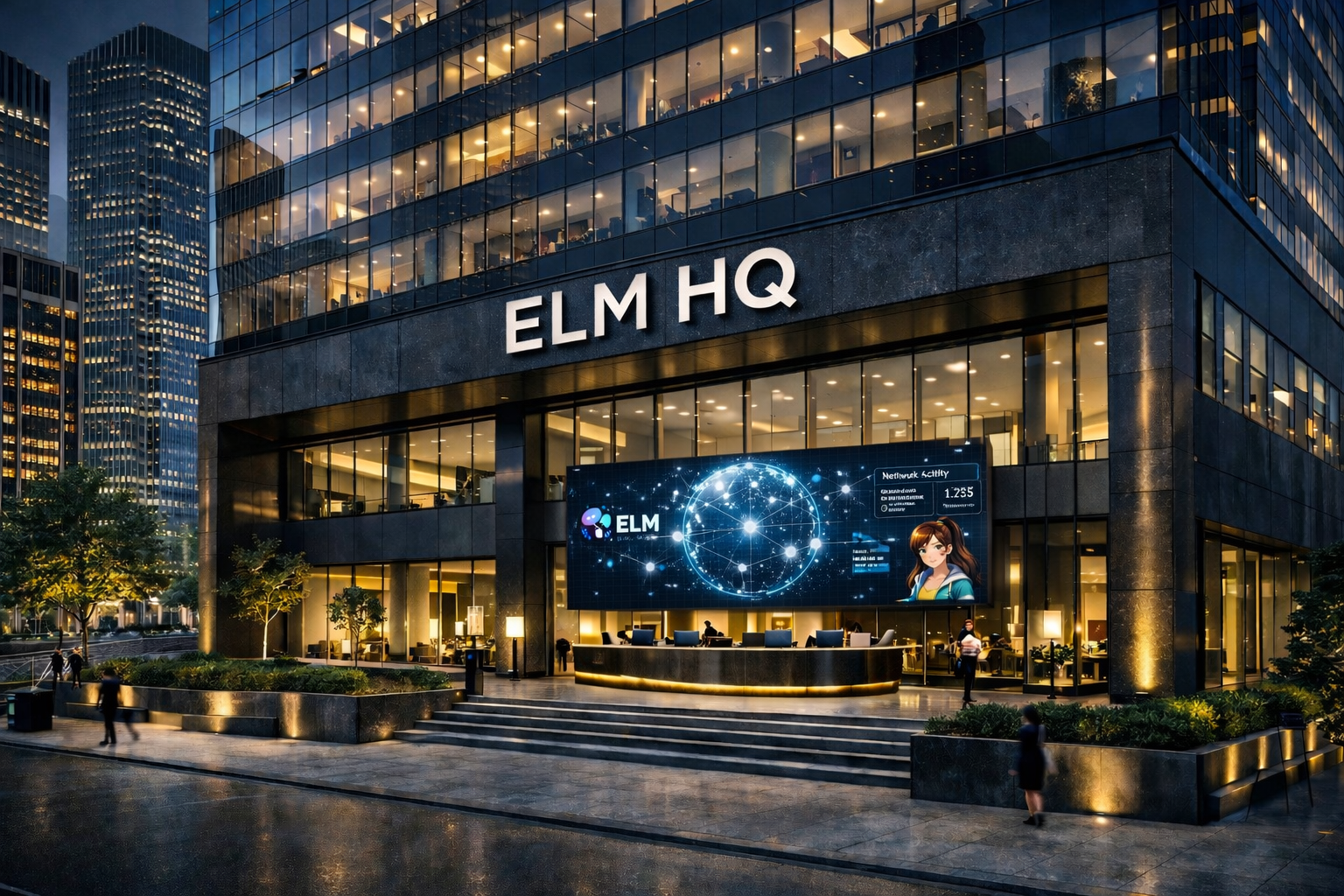
ELM is the privacy-first social and messaging app by ELM HQ. Direct messages, encrypted voice, profiles, spaces, communities, creators, businesses and discovery now belong to one product.
ELM is one social and communication app created by ELM HQ. Messenger and elm.social are no longer presented as separate products.
It is built for personal communication, spaces, creator interaction, encrypted voice, and controlled private communication. It is not a marketing automation tool, not a developer library, and not a game engine.
ELM is designed for communication and social presence that feel more alive, more expressive, and more human than typical mass-market messaging or attention-driven social apps.
ELM is not designed to be another generic messaging or social product where everything feels flat, disposable, and interchangeable.
It is built to make communication feel more expressive, more personal, and more connected again — without needing to become noisy, overloaded, or chaotic.
That includes presence, status, themes, encrypted voice, chat locking, creator monetisation tools, and a stronger sense that communication belongs to real people rather than anonymous message bubbles floating in a generic interface.
Messaging feels different when people feel present. ELM gives presence a stronger role instead of reducing everything to silent text exchange.
Personal status and lightweight updates help communication feel closer, more everyday, and more alive.
Themes are part of the experience rather than decoration alone, helping make communication feel more personal and less generic. Theme choices can also shape how chats feel visually.
ELM is designed for more than text alone, with encrypted voice built directly into the platform alongside messaging, presence, and status.
Chats can be locked for stronger personal privacy, giving users another layer of control over sensitive conversations.
New-device approval is already enabled. ELM checks for another compatible signed-in device with recent activity, giving the account stronger protection without asking the user to set it up first.
Notifications can be turned off for a single person with one click, allowing users to control distractions without muting their whole communication environment.
ELM includes Spaces, making it possible for communication and communities to sit closer together when that makes sense.
Spaces work as communities and can be configured in different ways, including open, private, invite-only, or fully hidden.
This gives users and creators more flexibility. Some Spaces are meant to be discoverable. Others are meant to stay controlled, restricted, or invisible unless access is granted directly.
Inside the ELM environment, Hub is the creator-driven content layer, while Spaces work more like communities.
That separation matters because it helps keep the platform clearer. Creator content does not have to behave like a community, and communities do not have to behave like a creator feed.
Messenger can now connect more naturally with both, without everything collapsing into one mixed surface.
Creators and users can earn by selling content through private chats, making direct interaction part of the monetisation layer.
Content can also be sold through Spaces, allowing creators to build monetised community experiences inside the wider Messenger environment.
A sender can send a scrambled message that someone can choose to unscramble for a price.
Posts and content can be unlocked through paid access instead of being limited to one flat visibility mode.
In paid unlock flows such as scrambled messages and post unlocks, the creator or sender earns the credits — not ELM.
The platform is not limited to one rigid monetisation style. Private chat, Space content, and controlled unlocks can all play a role.
ELM is also expanding into GPS-based chat behaviour, allowing chats to appear only at a certain location or remain hidden unless the user is within a tightly controlled radius.
This creates room for more contextual communication, where a chat can belong to a place rather than simply existing everywhere by default.
By design, this kind of visibility is intended to stay controlled, with hidden-by-default behaviour and a tighter geographic boundary.
ELM is designed with modern encryption and privacy architecture across identity, session setup, message protection, media handling, and server-side storage.
Account protection begins before a user changes a setting. ELM's own two-step sign-in protection is enabled by default; when a new device needs approval, the system requires another compatible signed-in device that has been active recently, rather than relying on a stale installation simply because it once belonged to the account.
Message transport uses an Ed25519 identity key, X25519 prekeys and session setup, AES-256-GCM for message encryption, and HKDF-SHA256 for secure key derivation.
In simpler terms, that means ELM is built around modern 256-bit elliptic-curve cryptography for identity and session establishment, 256-bit authenticated symmetric encryption for protected message payloads, and standard secure key derivation for session material.
Media handling is also protected, with encrypted media support and data stored encrypted on the server side. Privacy is not treated as a front-end slogan alone — it extends into how message and media data are handled structurally.
Cursor-based encrypted handling is also part of the wider design direction, helping reduce how messaging data is exposed or represented in a simple, easily readable way across the system.
ELM is intended to give users more control over how communication feels, how it is protected, and how much of their messaging life has to rely on generic third-party patterns.
That includes stronger protection of messages and media, more control inside chats, more structured separation between communication layers, and more room for messaging to remain personal rather than being flattened into a generic utility.
“ELM Messenger” and “elm.social” describe capabilities inside the current ELM product, not two products users have to choose between.
Private chats and encrypted voice sit beside identity, profiles, spaces, presence, creators and discovery. The interface keeps those contexts clear while the account, application and platform remain one.
Combining them does not mean making private conversation public. Each surface keeps the audience and privacy rules appropriate to what the user is doing.
ELM is more than social. It is a secure communication platform designed for trusted interaction between people, systems, AI, and connected infrastructure.
Within the wider ecosystem, ELM carries personal communication and social interaction. It works alongside Viewsly, Eliza and the European infrastructure behind them.
This is what allows messaging to feel more intentional while still remaining part of something larger.
ELM is ELM HQ's combined social and messaging app, built for private conversation, encrypted voice, profiles, spaces, communities, creators, businesses and discovery.
Yes. Encrypted voice is built directly into ELM as part of the wider communication experience.
Yes. Spaces are built into ELM and can be open, private, invite-only, or fully hidden.
No. They are capabilities within the current ELM product. Private messaging and social interaction keep different visibility rules, but share one app, account and platform.
Yes. Creators and users can earn through paid content in Spaces, private chat content, scrambled messages, and paid unlocks. Credits go to the sender or creator, not ELM.
ELM uses Ed25519 identity keys, X25519 prekeys and session setup, AES-256-GCM for message encryption, and HKDF-SHA256 for secure key derivation, with encrypted media and encrypted server-side data handling as part of the wider privacy architecture.
Messaging that feels more personal, more expressive, more protected, and more alive again.